Vocal Mixing
How to use dynamic EQ on vocals without making them dull
On this page12 sections
- Before touching the EQ
- Step 1: make static tonal moves first
- Step 2: locate one changing problem
- Step 3: set direction, range and threshold
- Step 4: tune timing by listening
- Four useful vocal applications
- Changing low-mid buildup
- Resonant vowels
- Harsh belted notes
- Sibilance
- Before or after the compressor?
- Final quality check
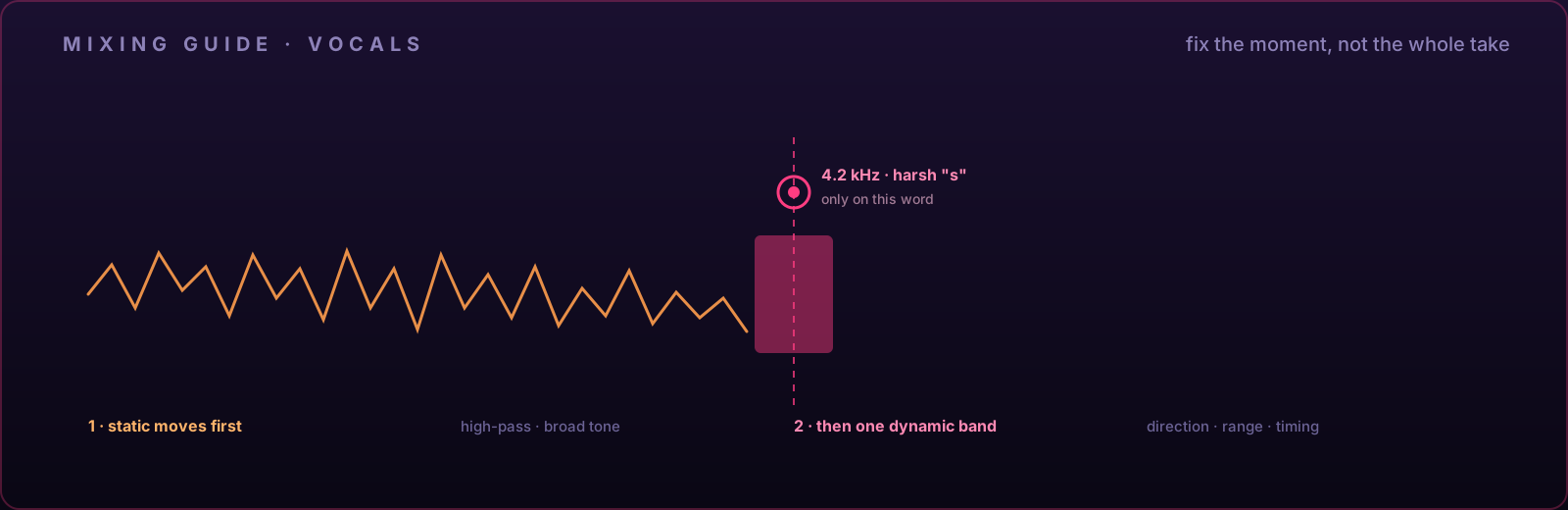
The best reason to use dynamic EQ on a vocal is simple: the problem is not there all the time. One phrase gets woolly when the singer leans toward the microphone. One vowel rings. A chorus turns sharp when the performance gets louder. A static cut can control the worst moment while making the rest of the take unnecessarily thin or dull.
Dynamic EQ lets a selected band move only when its trigger condition is met. The goal is not to animate every EQ point. It is to let the healthy parts of the performance pass unchanged.
Before touching the EQ
Listen to the vocal in the full mix and write the problem in ordinary language: “boomy on close words,” “one nasal vowel,” “chorus gets hard,” or “S sounds jump forward.” That description tells you when the band should move.
Also check the recording. Directional microphones can add bass as the singer moves closer—the proximity effect. Room reflections, stacked doubles and dark reverbs can create buildup that no setting on the lead vocal alone will fully solve. The guide to why vocals sound muddy helps separate those causes.
Step 1: make static tonal moves first
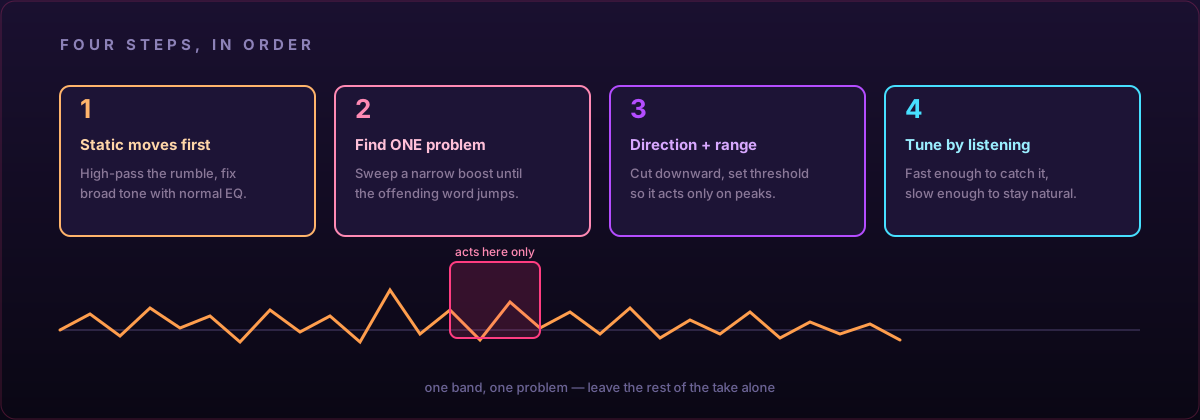
Use ordinary EQ for problems that remain present across the whole take. Remove irrelevant rumble if it is genuinely there, and make any broad tonal adjustment the recording consistently needs.
Do not high-pass by habit or copy a cutoff from a chart. Voice, microphone, pitch, arrangement and genre all change what is useful. Raise a filter only while it improves the mix; stop before the vocal loses body.
Step 2: locate one changing problem
Loop a section that contains both a good phrase and the problem phrase. Add one bell and sweep a temporary boost until the unwanted quality becomes obvious. Return the gain to neutral, then choose a width that covers the problem without grabbing unrelated tone.
Keep the level sensible while searching. A very loud sweep makes almost every frequency sound unpleasant and encourages cuts that do not help the mix.
Step 3: set direction, range and threshold
For an excess, choose downward movement. Set the maximum range modestly, then lower the threshold until the band reacts to the problem phrase but relaxes during the good phrase.
Watch the meter, but trust the transition. If the vocal audibly changes color on every word, reduce the range, widen the band gently or adjust the threshold. If the band never returns to rest, consider a static cut.
Step 4: tune timing by listening
Fast action can catch a brief spike or sibilant consonant. Slower action may sound smoother on sustained vowel buildup. Release that is too short can flutter; release that is too long can leave the following words dull.
Some dynamic EQs expose attack and release, while others use program-dependent behavior. In either case, listen for natural recovery rather than chasing a universal millisecond value.
Four useful vocal applications
Changing low-mid buildup
Use a medium-width downward band where the bloom actually occurs. Trigger it from the affected phrases and preserve the natural body between them. If the buildup is constant, go back to static EQ or improve the recording.
Resonant vowels
A narrower band can control a note or vowel that rings on particular words. Check several sections of the song; a notch that follows one note perfectly may be irrelevant elsewhere.
Harsh belted notes
Place a moderate band over the region that hardens when the singer pushes. Aim for a small change on the loud phrases while retaining articulation on the quieter ones. A drastic permanent presence cut often trades harshness for lost intelligibility.
Sibilance
A dynamic band can work as a precise de-esser. Find the singer’s actual sibilant region, set fast enough action to catch it and limit the depth so consonants remain understandable. Compare against a dedicated de-esser; there is no prize for using the more complicated tool.
Before or after the compressor?
Place dynamic EQ before compression when a resonance is pushing the compressor into unwanted gain reduction. Place it after compression when compression makes a frequency problem more obvious. You may use a small corrective band before and a different finishing band after, but only when each has a separate job.
For a complete all-in-one chain, SPC Vox includes dedicated MUD, TAME, DEESS and HARSH modules alongside cleanup, level and tone stages. For individual frequency work, SPC Prism Q turns any of its EQ points into a dynamic band.
Final quality check
Level-match bypass as closely as possible and test the loudest and quietest sections. Then ask:
- Did the bad moment improve?
- Does the good moment still sound like the singer?
- Does the vocal work in the mix, not just in solo?
- Could a smaller move do the same job?
If yes, stop. Dynamic EQ is most convincing when the listener never notices it moving.
For the processor choice behind this workflow, read dynamic EQ vs multiband compression.
Frequently asked questions
Where should I use dynamic EQ on vocals?
Use it where a frequency problem changes with the performance: a low-mid bloom on close phrases, a resonant vowel, harshness on belted notes or an over-prominent sibilant region. Locate the issue in the recording rather than relying on a universal frequency.
Should dynamic EQ go before or after vocal compression?
Either can work. Before compression can stop a resonance from driving the compressor; after compression can catch frequencies the compressor brings forward. Choose the order that reacts more naturally in your specific chain.
Can dynamic EQ work as a de-esser?
Yes. A downward dynamic bell can attenuate the singer's problem sibilant region only when it becomes prominent. Compare it with a dedicated de-esser and keep whichever preserves consonant clarity better.