Mixing Guides
Dynamic EQ vs multiband compression: which should you use?
On this page10 sections
Dynamic EQ and multiband compression sit close together in the mixing toolbox. Both react to level inside a selected part of the spectrum. Both can control bass buildup, vocal harshness or an over-bright mix without turning the entire signal down.
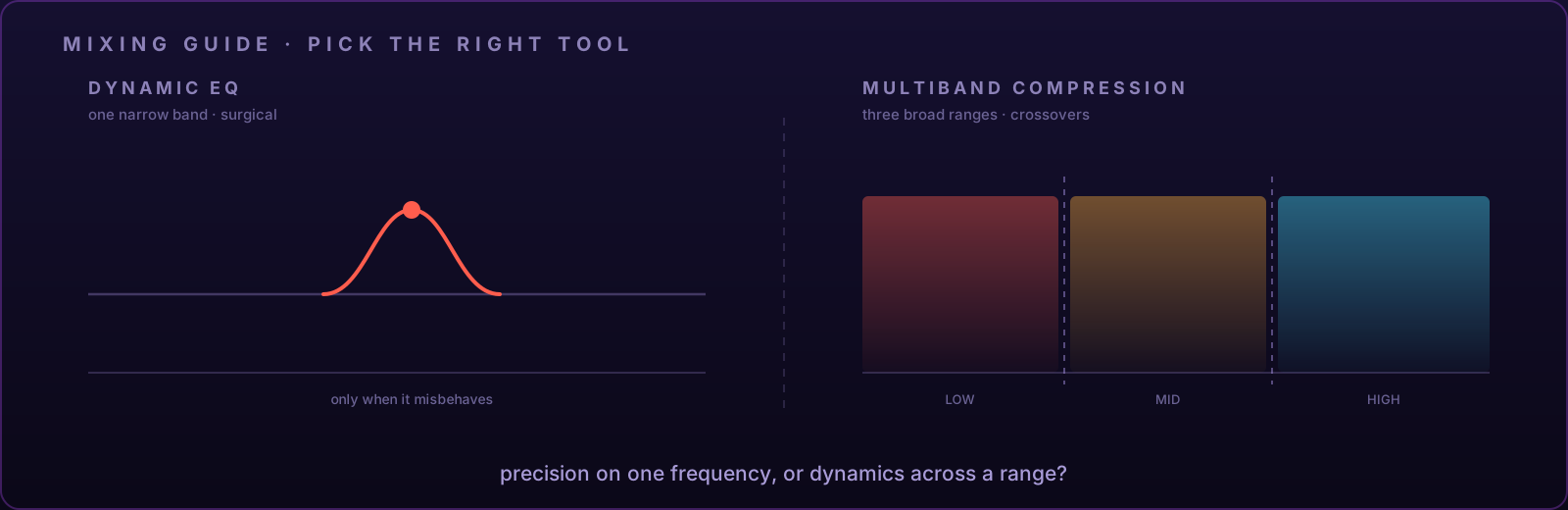
The useful difference is architectural: a dynamic EQ moves an EQ band; a multiband compressor splits the signal into ranges and compresses each range. That distinction changes how precisely you can target a problem and how the processor feels.
The short answer
Use dynamic EQ when one frequency or a relatively narrow region becomes too loud only sometimes. Use multiband compression when a broad range needs its own compression envelope, or when you want the cohesion and character of compression across that range.
| Question | Dynamic EQ | Multiband compression |
|---|---|---|
| What moves? | The gain of an EQ bell or shelf | The level of a crossover-defined band |
| Typical target | Narrow or precise | Broad low, mid or high range |
| Core controls | Frequency, Q, range, threshold | Crossovers, threshold, ratio, attack, release |
| Best starting use | Intermittent resonance or masking | Range-wide dynamics or tonal glue |
| Can it boost dynamically? | Commonly, yes | Only when expansion or upward modes are provided |
These are tendencies, not laws. Modern processors overlap, so the right choice is the one that solves the audible problem with fewer side effects.
How the signal paths differ
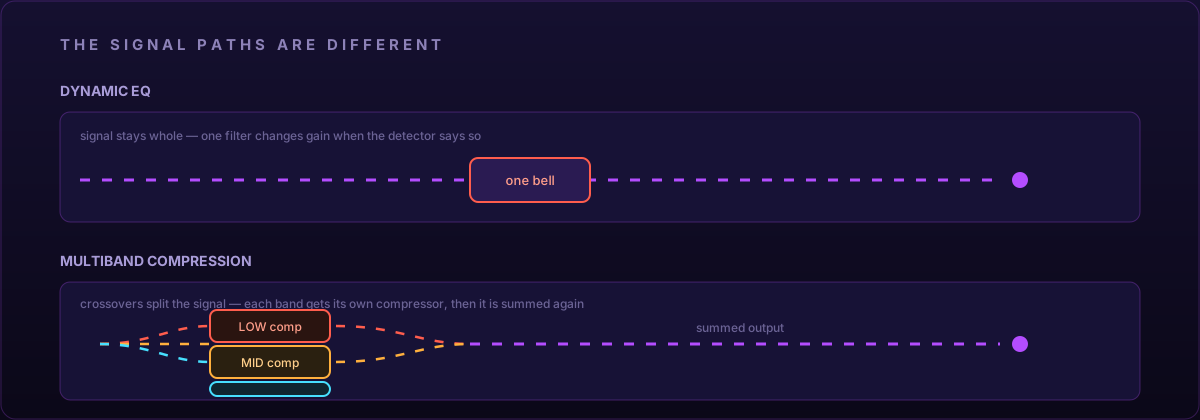
A multiband compressor uses crossover filters to divide the full signal into adjacent frequency ranges. Each range feeds its own dynamics section, then the ranges are recombined. That makes it natural to give the bass a slower attack while controlling the high band with a different envelope.
A dynamic EQ retains the familiar parametric-EQ workflow. You choose a bell or shelf, set its frequency and width, then define how far it can move when triggered. This makes it quick to reach one resonant note or vowel without turning the neighboring spectrum into a separate compression band.
If the terminology is new, read what dynamic EQ is and how to set it first.
Choose dynamic EQ for precision
Dynamic EQ is a strong first choice when:
- one vocal vowel develops a boxy or harsh resonance;
- a bass note blooms more than the others;
- a hi-hat becomes piercing only on accented hits;
- the kick needs a small, sidechain-triggered space in the bass;
- a static cut fixes the bad moment but weakens every good moment.
Start with one band. Find the issue while listening in context, set a modest maximum range, then lower the threshold until the band reacts mainly to the offending moments. Bypass frequently. If the reduction is active almost all the time, the problem may call for static EQ instead.
Choose multiband compression for broader control
Multiband compression makes more sense when:
- the entire low range of a bus is inconsistent;
- a mastering move needs different timing for lows and highs;
- a wide midrange needs compression rather than one resonant cut;
- you want audible density or movement from frequency-dependent compression;
- upward and downward processing across several broad ranges is part of the sound design.
Set crossover points by ear and solo bands only long enough to diagnose. Judge the result with all bands recombined, because that is where crossover placement, timing and gain balance matter.
Three tests that settle the choice
1. Narrow or broad?
If you can point to one frequency on an analyzer, begin with dynamic EQ. If you describe the problem as “the low end” or “the upper mids,” a multiband compressor may be the more natural tool.
2. Correction or character?
For transparent correction, make the smallest targeted move that works. For intentional density, glue or envelope shaping, the compressor behavior may be the point.
3. Constant or occasional?
A constant tonal imbalance often needs static EQ. A changing resonance suggests dynamic EQ. A broad range whose level and envelope change suggests multiband compression.
A vocal example
Suppose a lead vocal is balanced in the verse but develops a low-mid bloom when the singer gets close to the microphone. A narrow-to-medium dynamic bell can reduce that region only when it builds up. If the whole lower half of the vocal needs a distinct attack and release throughout the performance, a multiband compressor gives that wider range its own dynamics stage.
For the complete setup, follow how to use dynamic EQ on vocals. If you are not sure whether the recording, arrangement or EQ is responsible, use the muddy-vocal diagnosis checklist.
Try the decision inside one mix
Do not insert both tools by default. Duplicate a short problem section, level-match two solutions and ask:
- Which version fixes the issue outside solo?
- Which keeps the natural tone when the problem is absent?
- Which needs fewer bands and less gain movement?
The simpler answer usually survives the rest of the mix better.
SPC Prism Q provides dynamic processing on each of its 24 EQ bands, including Clean, VCA, FET, Opto and OTT-style characters. It is the Spectral Colors option when the job begins as EQ and needs to become dynamic.
Frequently asked questions
Is dynamic EQ better than multiband compression?
Neither is universally better. Dynamic EQ is usually the more precise choice for a narrow or intermittent resonance. Multiband compression is useful when a broad frequency range needs independent dynamics, envelope control or deliberate compression character.
Can dynamic EQ replace a multiband compressor?
It can handle many corrective jobs, but it does not always create the same broad-band glue or crossover-based behavior. Choose by listening to the problem, not by treating the processors as interchangeable.
Which is better for vocals?
For one changing resonance, harsh vowel or sibilant region, dynamic EQ is often the focused starting point. For broader low, mid or high ranges that need separate compression behavior, multiband compression may be more suitable.